Oak frame bridge
design, build & installation
Croome Bridge
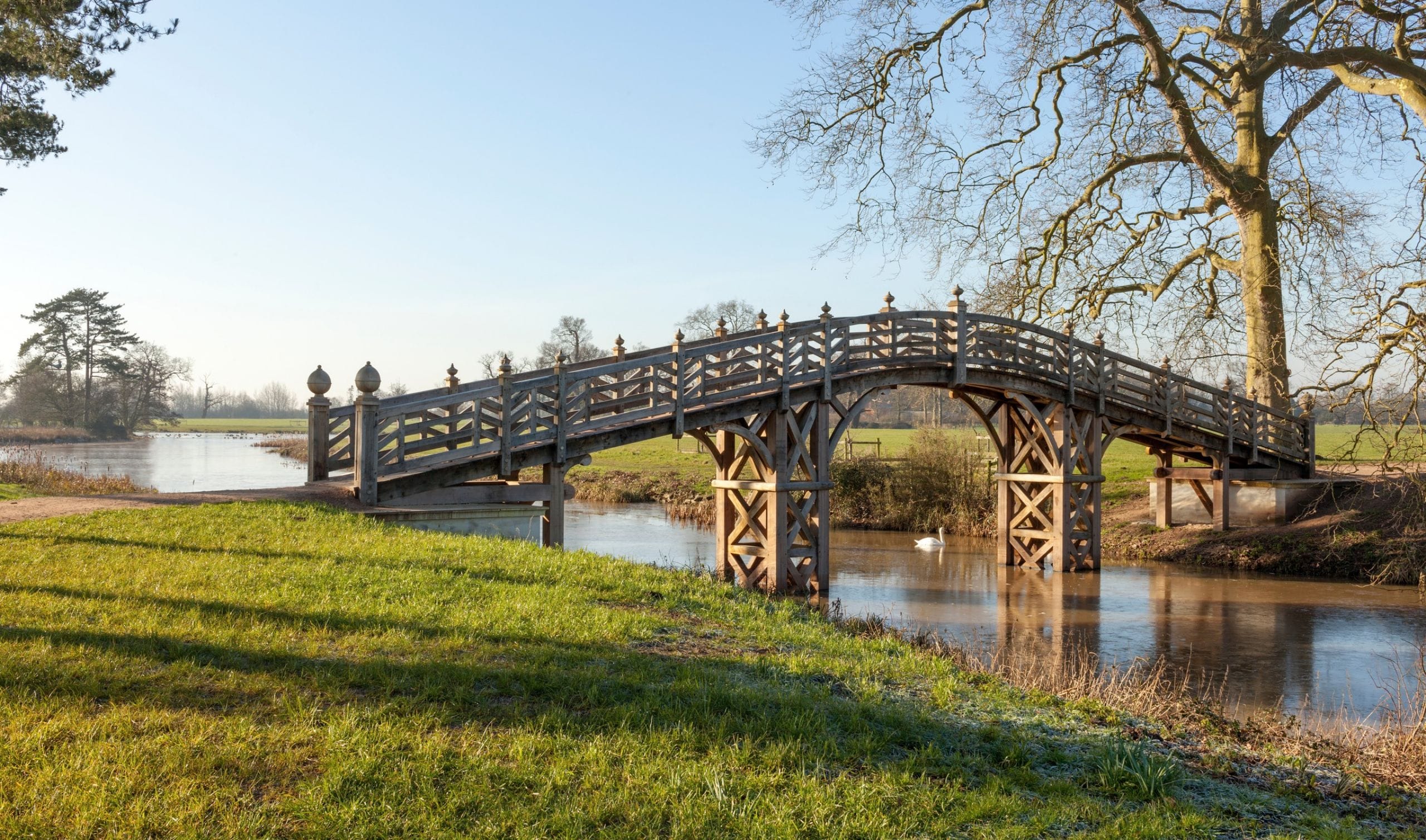
Set within the historic parkland of Croome Court in Worcestershire, this striking oak bridge was reconstructed for the National Trust using the surviving original design by 18th-century architect and designer William Halfpenny.
Spanning the water within Croome’s celebrated landscape, the bridge combines traditional timber craftsmanship with careful historical research, reinstating an important architectural feature and reconnecting the landscape on either side.
- Structural EngineerThe Morton Partnership Consulting Engineers
- Builder
- LocationCroome Court, Worcestershire
- Crafted byThe Green Oak Carpentry Team
Reconstructing the original design
Originally built for the 6th Earl of Coventry in 1751, the oak bridge formed part of the designed landscape at Croome. This project was not about creating a modern interpretation, but about remaining faithful to William Halfpenny’s original vision.
Historic drawings provided an invaluable reference, including details of the bridge’s proportions and timber section sizes, while archaeological investigation helped to verify the original bridge’s location and width.
Working from this evidence, Green Oak Carpentry developed a detailed 3D model in collaboration with The Morton Partnership Consulting Engineers, helping translate the historic design into a structure that could be carefully fabricated and constructed.
Traditional oak framing and conservation carpentry
The oak bridge is a beautiful example of how traditional timber framing and conservation carpentry can be brought together within a complex heritage project.
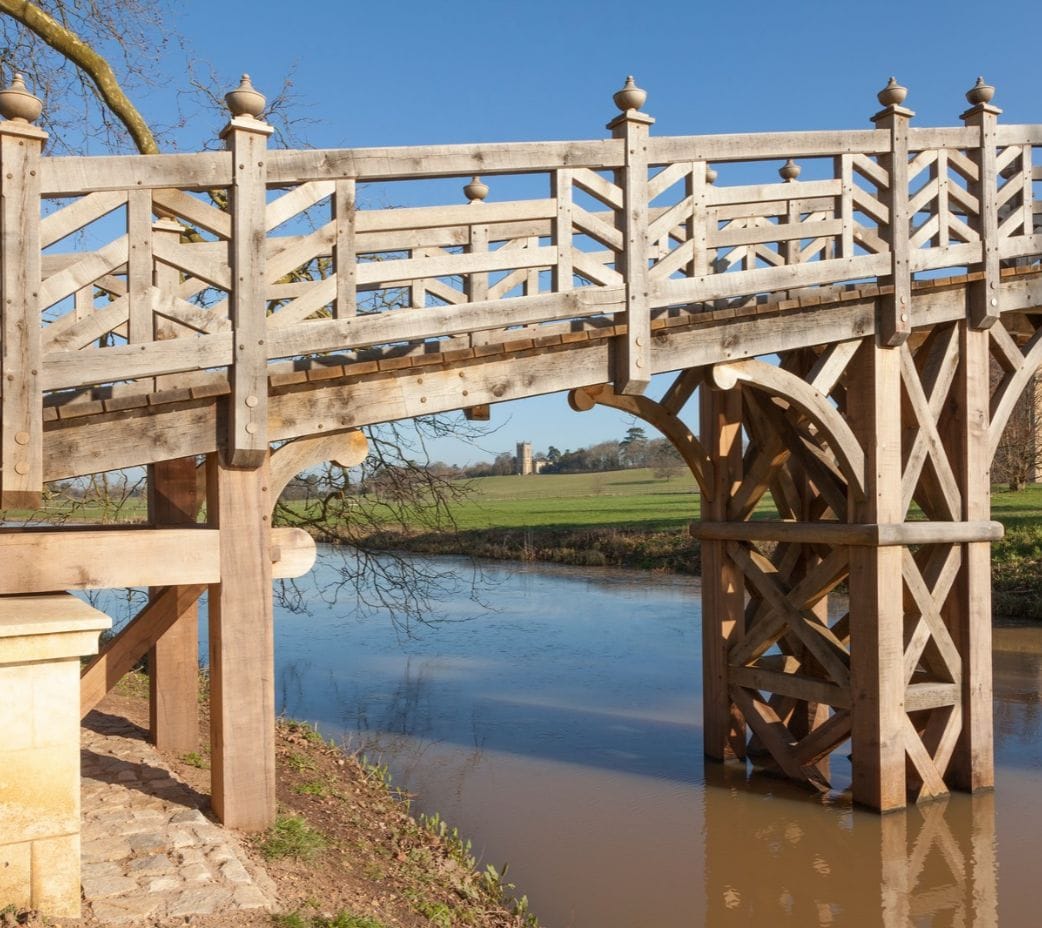
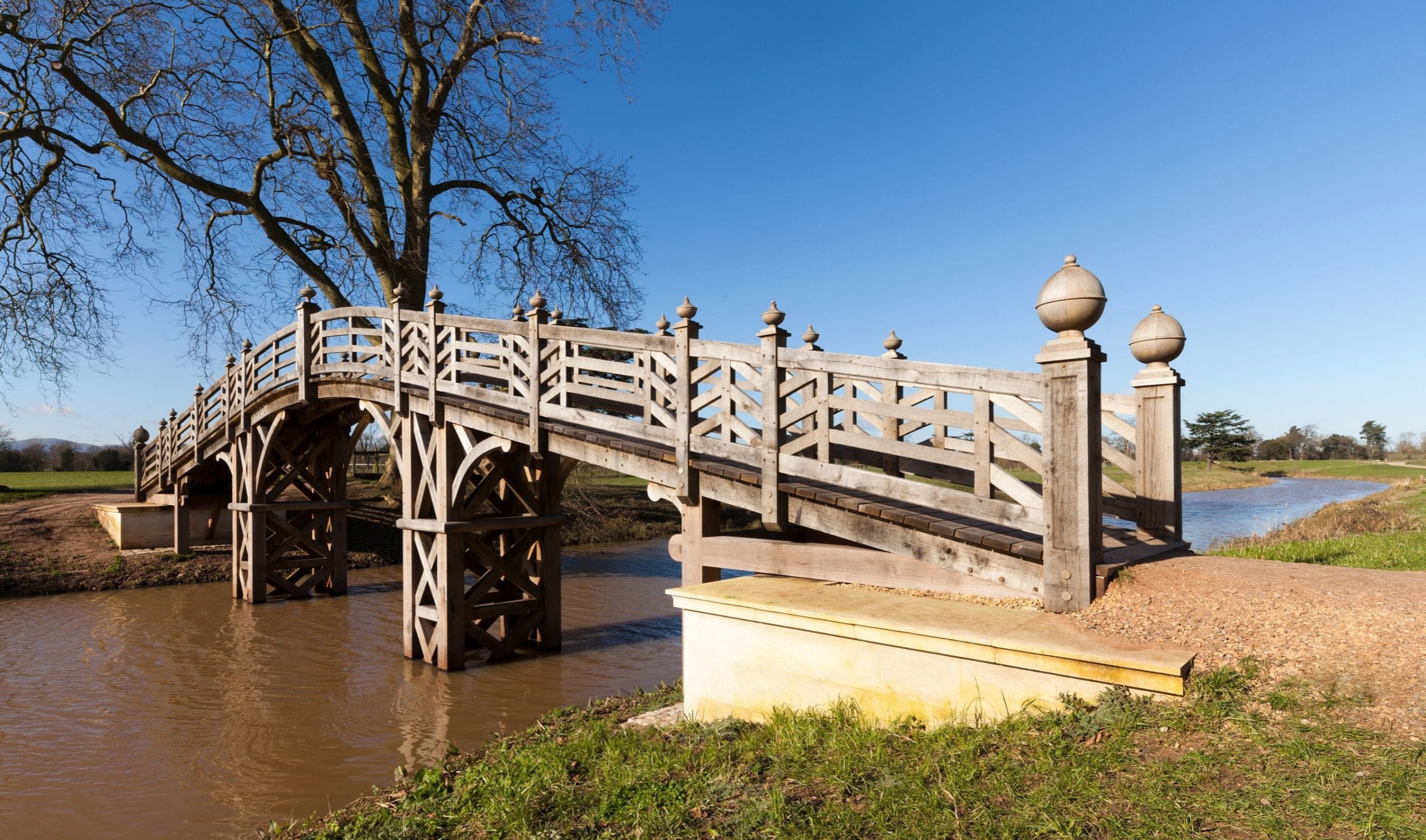
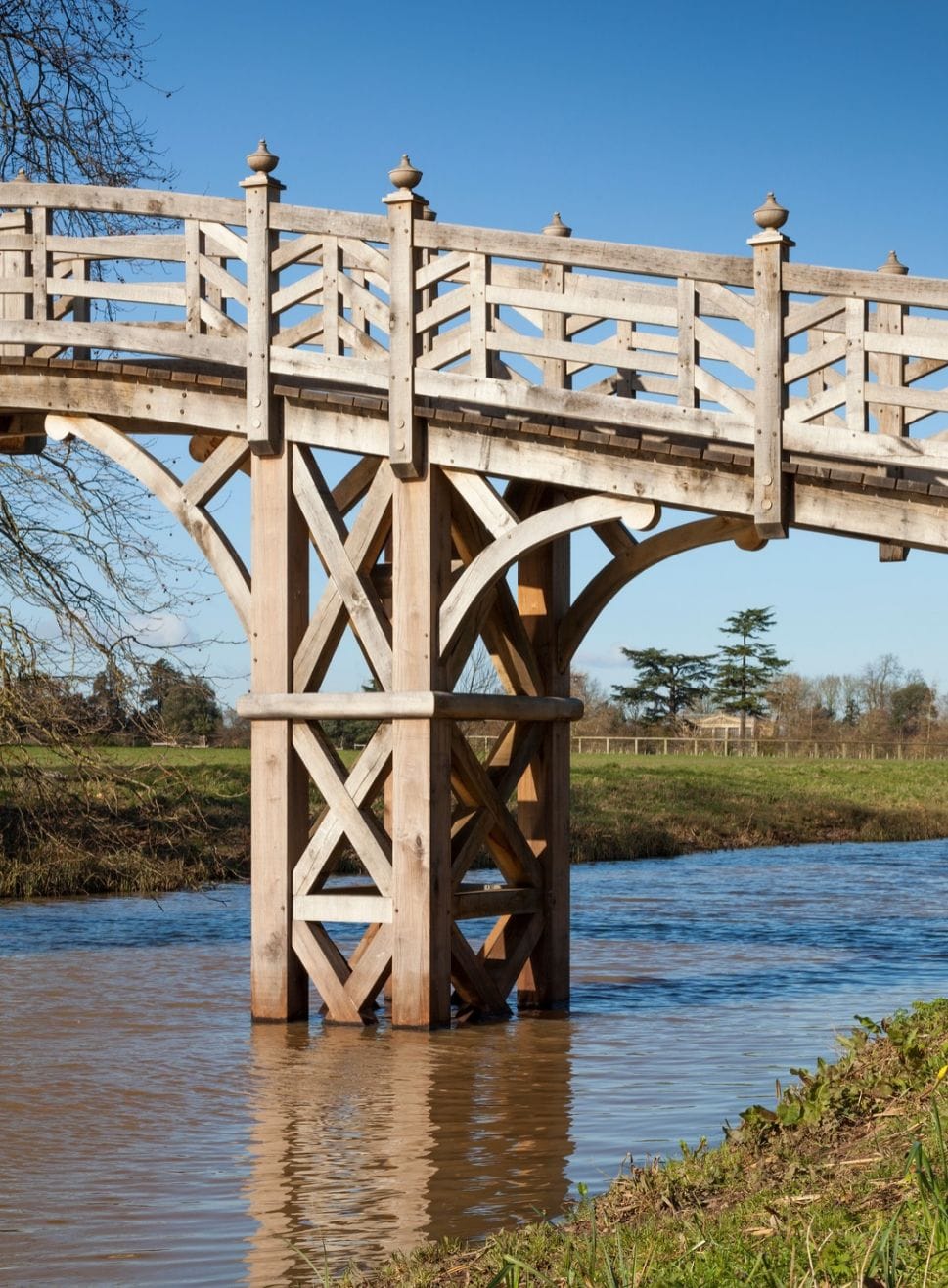
Fresh sawn oak was used for the structure above the waterline, with Greenheart selected for elements below the water and within the supporting structure. Traditional draw-bored mortise and tenon joints, secured with cleft oak pegs, were used throughout the oak frame.
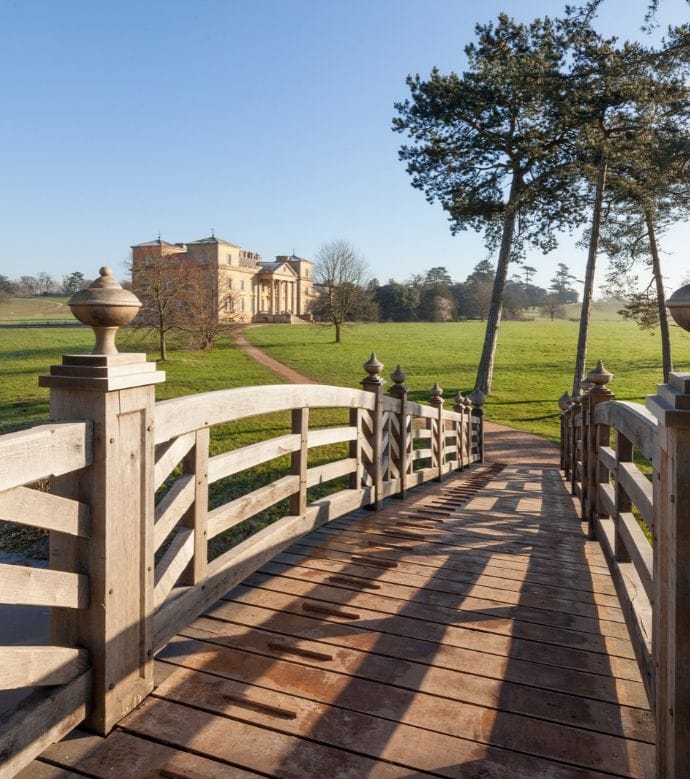
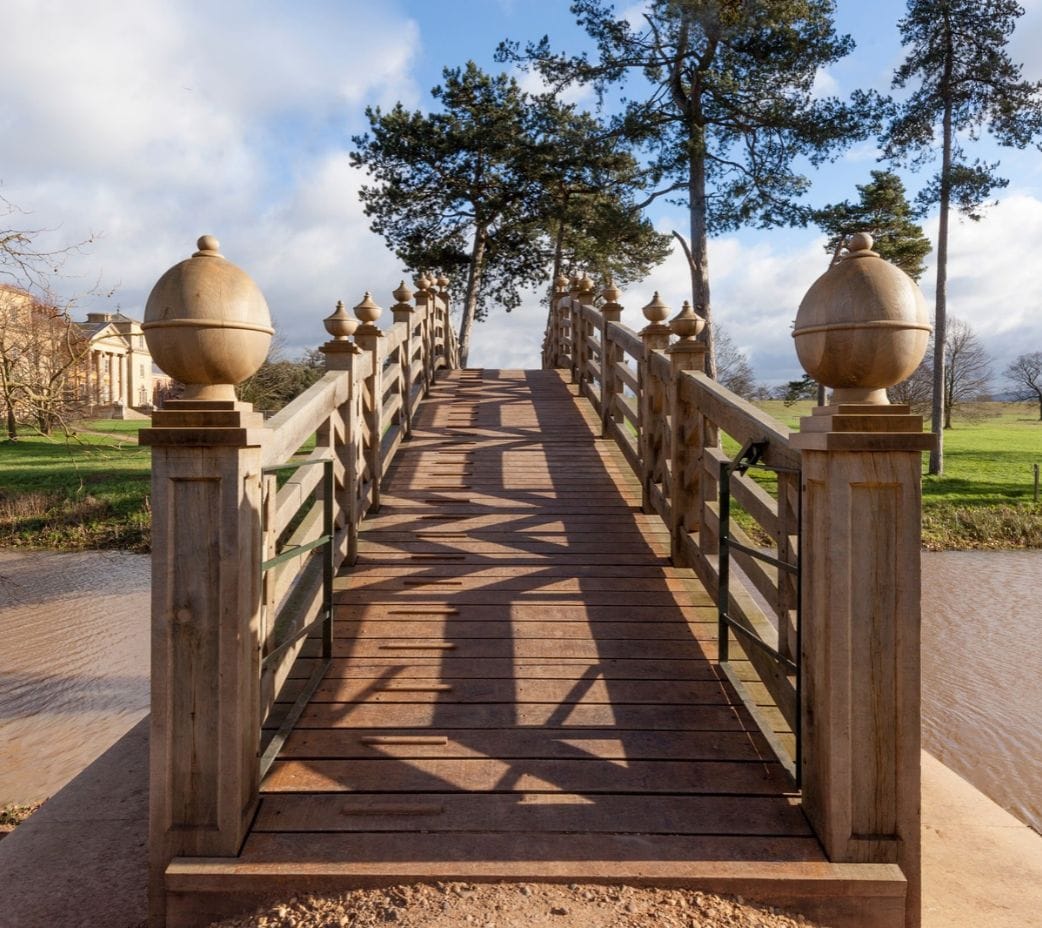
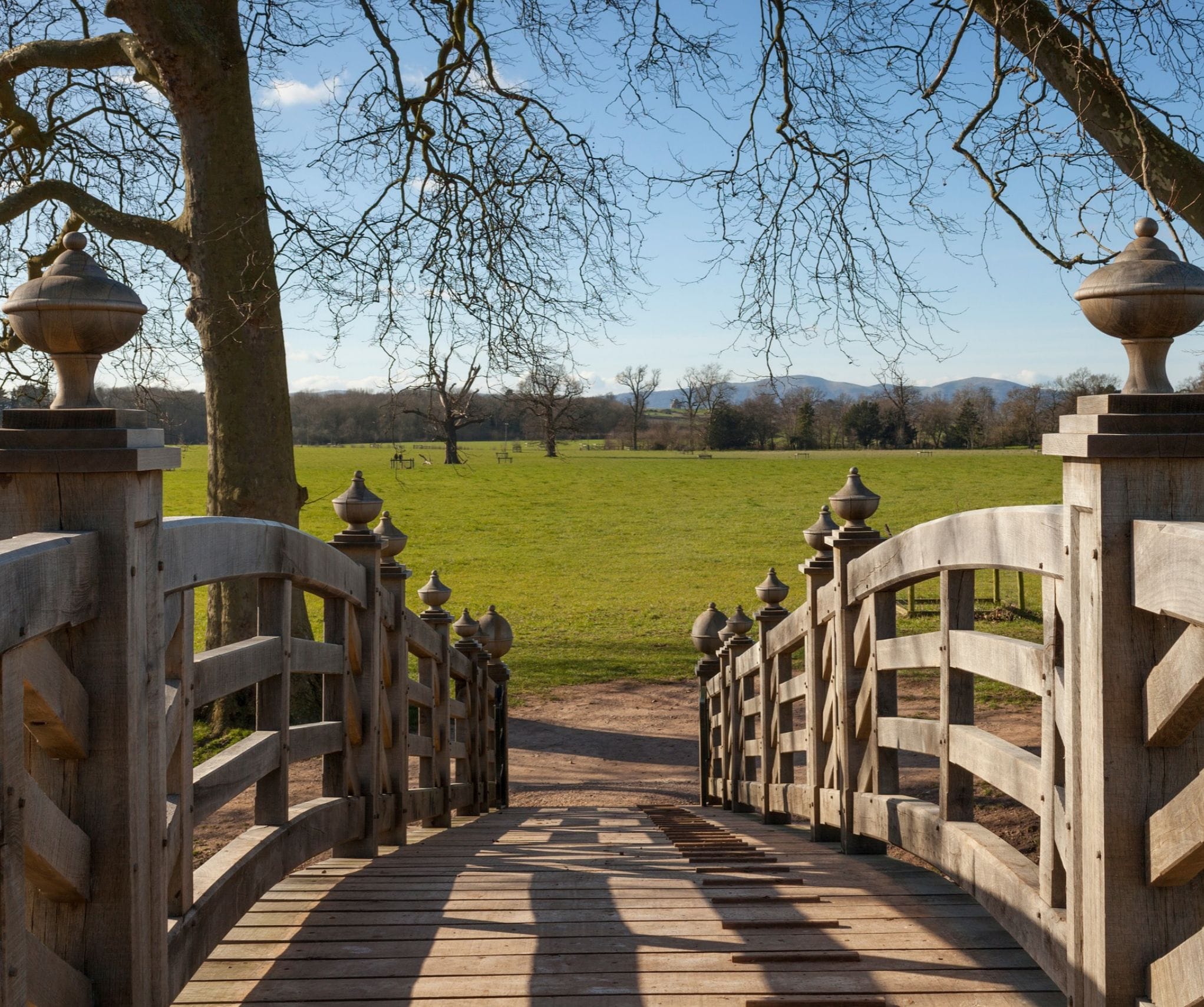
The sweeping form of the bridge is complemented by an intricate arrangement of braces, balustrades and decorative timber detailing. Turned finials to the posts and larger statement finials at each entrance give the bridge much of its distinctive character, while the exposed structure beneath reveals the craftsmanship involved in creating its elegant curved profile.
Made for its landscape
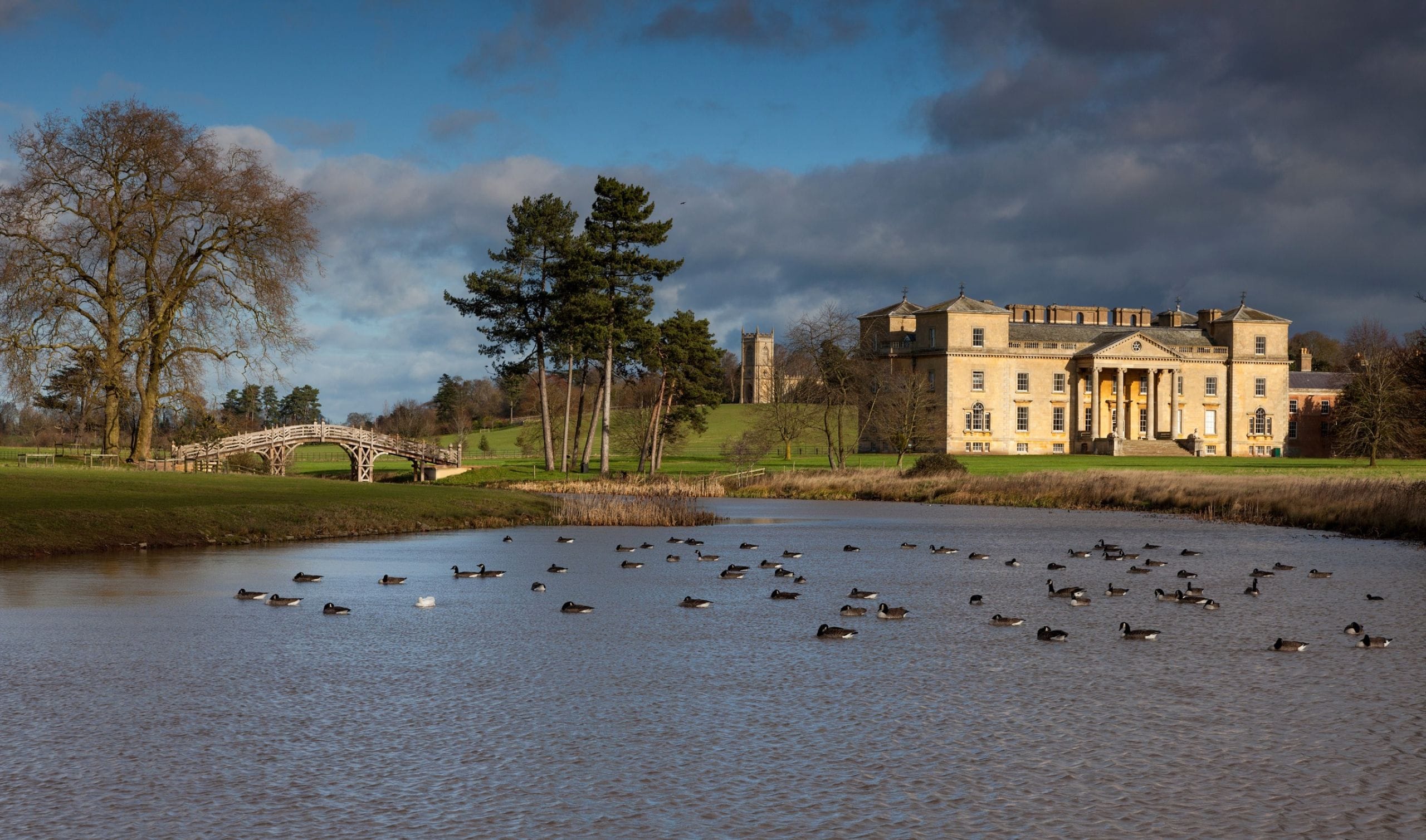
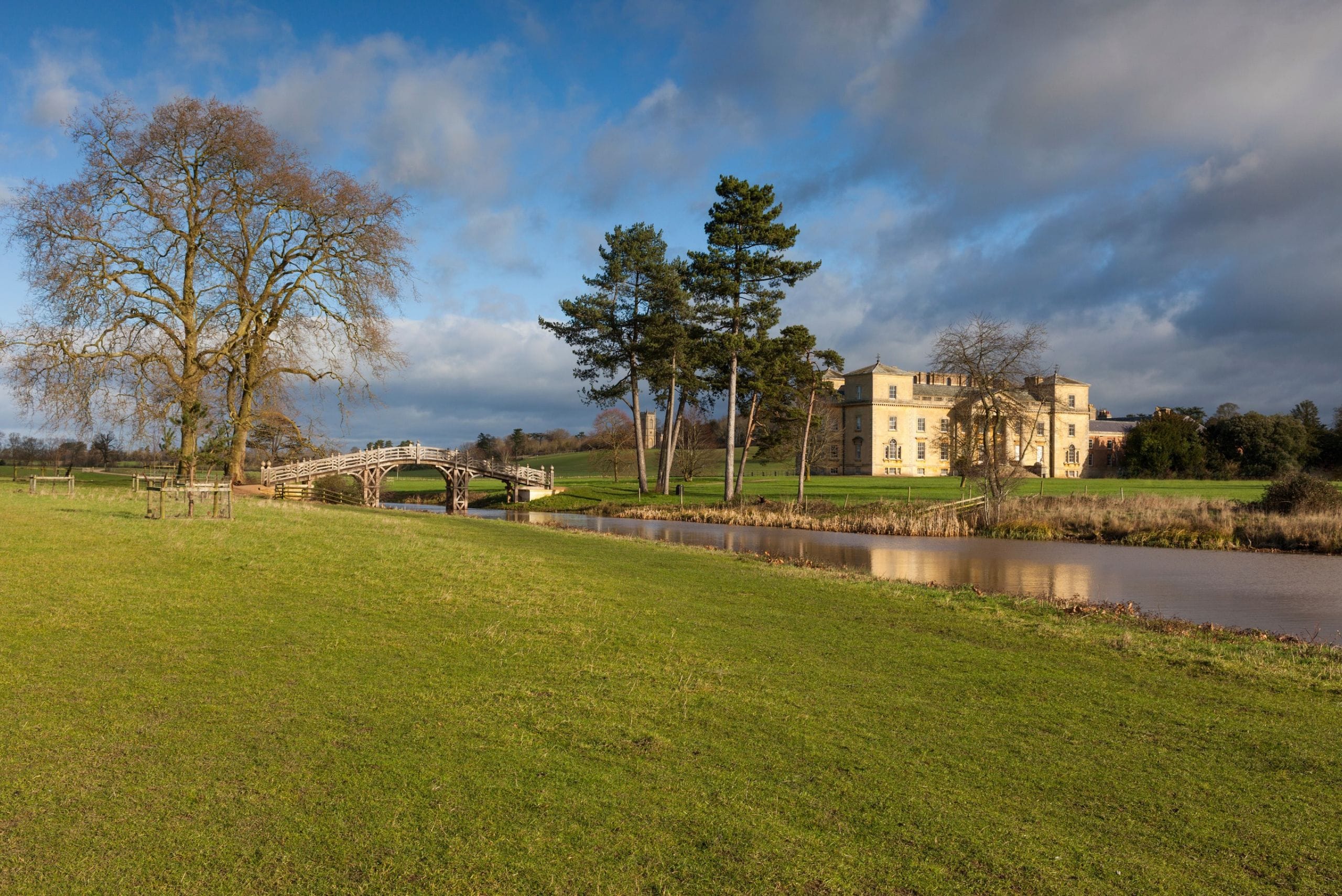
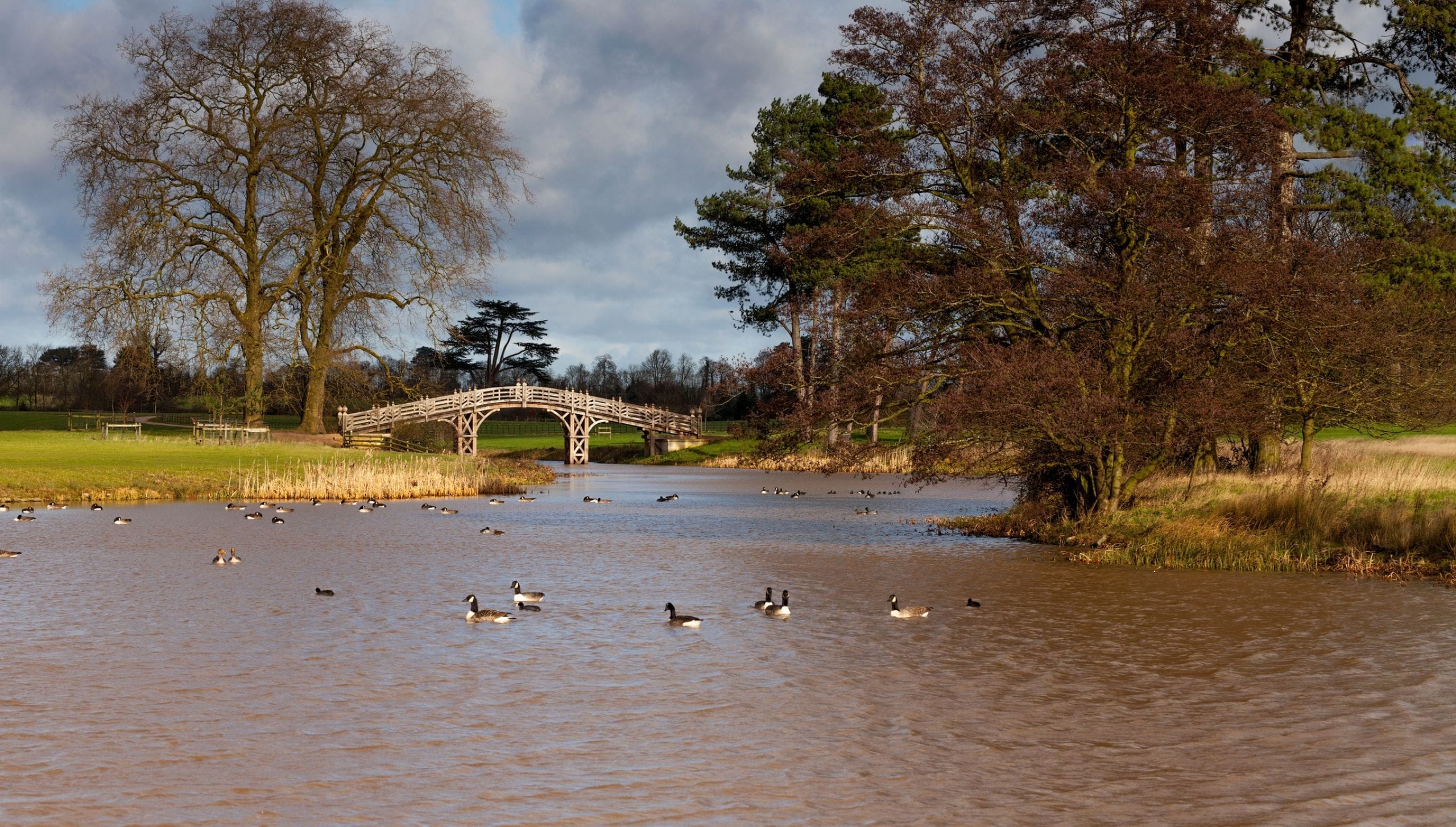
Seen from across the water, the bridge has a strong architectural presence while remaining entirely at home within Croome Court’s historic parkland.
Its gently rising form creates a focal point across the landscape, while views from the bridge itself open towards the surrounding grounds and historic house. The repetition of the timber balustrades and decorative details gives the structure a rhythm and lightness that contrasts beautifully with the substantial oak construction beneath.
It is both a functional crossing and an important part of the wider designed landscape – demonstrating how a carefully considered timber bridge can become an architectural feature in its own right.
Heritage craftsmanship through collaboration
Recreating a lost historic structure requires more than skilled carpentry. It depends upon research, engineering and conservation expertise working together.
The Croome Court bridge brought Green Oak Carpentry together with the National Trust, archaeologists and The Morton Partnership Consulting Engineers, combining historic evidence with contemporary design and engineering knowledge to bring this beautiful bridge back to life.
The result is an oak bridge that celebrates the character of Halfpenny’s original design while demonstrating the enduring relevance of traditional carpentry and timber-framing skills.
Preserving historic timber structures for the future
Projects such as Croome Court are a particularly good example of what heritage and conservation carpentry can achieve. By understanding historic construction, selecting appropriate materials and applying traditional techniques, significant elements of our built and designed landscape can be brought back to life.
For Green Oak Carpentry, projects of this kind provide an opportunity to use the same skills that have shaped historic timber structures for generations – combining craftsmanship, collaboration and an understanding of place to create something that feels as though it truly belongs.