


Our materials
Our timber & our craft
are intrinsically linked.
The Natural Choice
The beauty, strength & longevity of the buildings we create are borne from a time-honoured connection between maker & material.
We use a variety of materials and will work with you to specify the best option for your project, depending on your design’s complexity and your preferred aesthetic. Every project we take on is different, and so is every material choice. Whether you have a clear vision or the beginnings of an idea, we’re here to develop it with you. We’ll work with you to select the right material for your project – from traditional oak framing to structures that use wood in more forward-thinking ways.
Chosen with care
Chosen with care
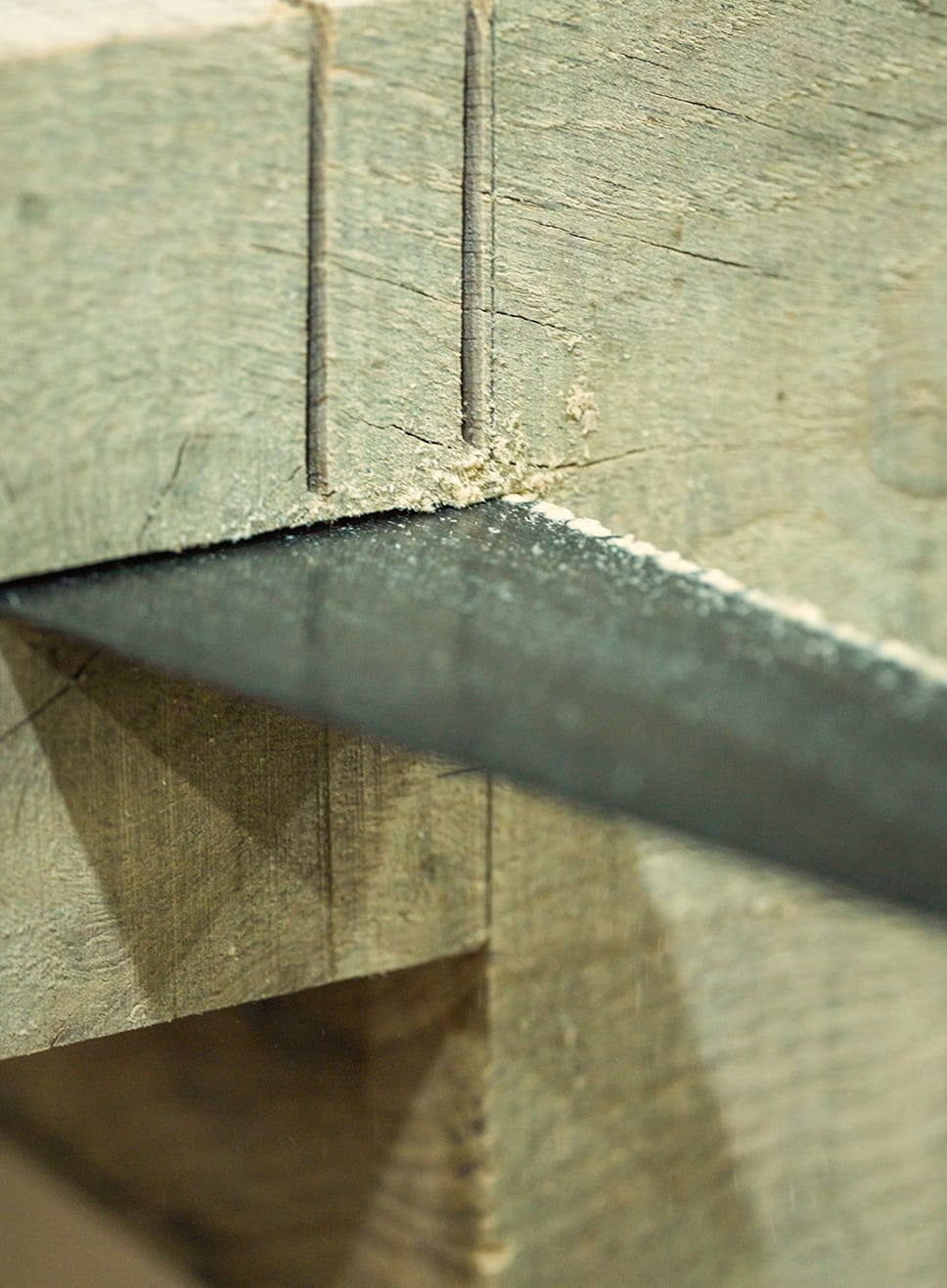
Jamie leads our timber selection – he works with sawmills across the UK and Europe to source timber that’s correctly graded for each project. Having built trusted, direct relationships with our sawyers and sawmills, he can ensure we always receive timber of the highest quality.
We select our wood on the following principles:
Structural integrity – we use only the best-quality QPA/QP1-grade timber and will request an even higher specification if required.
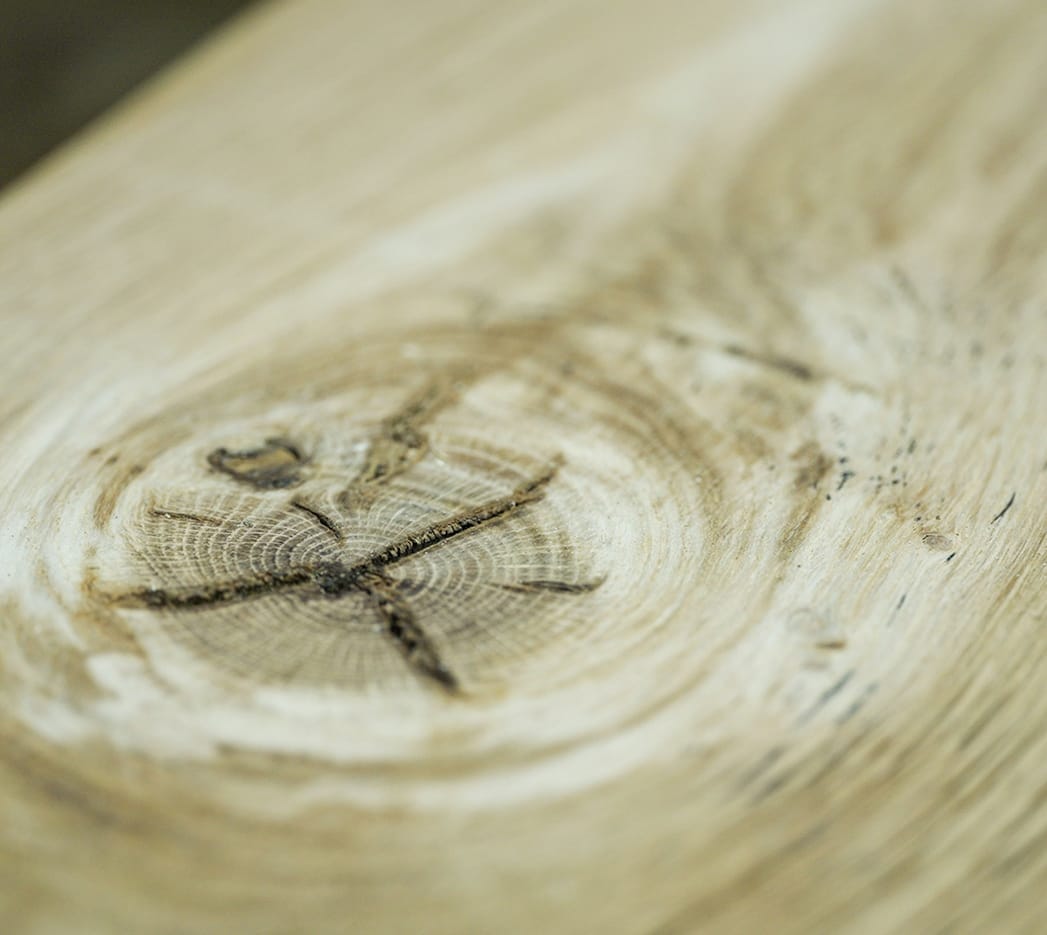
Natural beauty – grain pattern, colour and character play a critical role in the appearance of your finished frame.
Responsible sourcing – we only source certified suppliers operating within sustainably managed forestries.
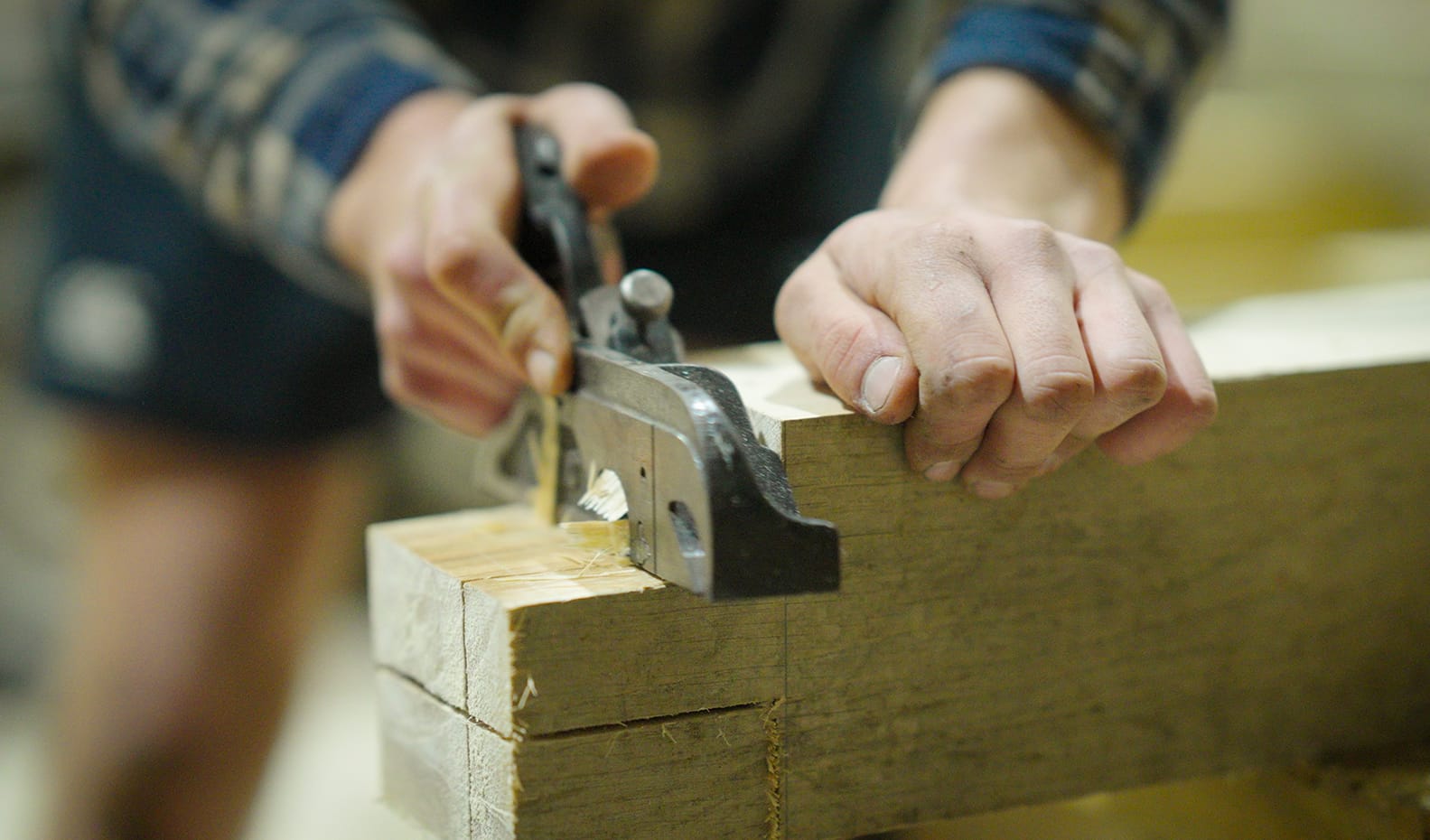
Once the materials arrive at our workshop, Jamie and the team leader responsible for your project will inspect them for quality. When approved, the timber is ready for our teams of carpenters to bring your design to life with traditional joinery techniques.
Jump to
Oak
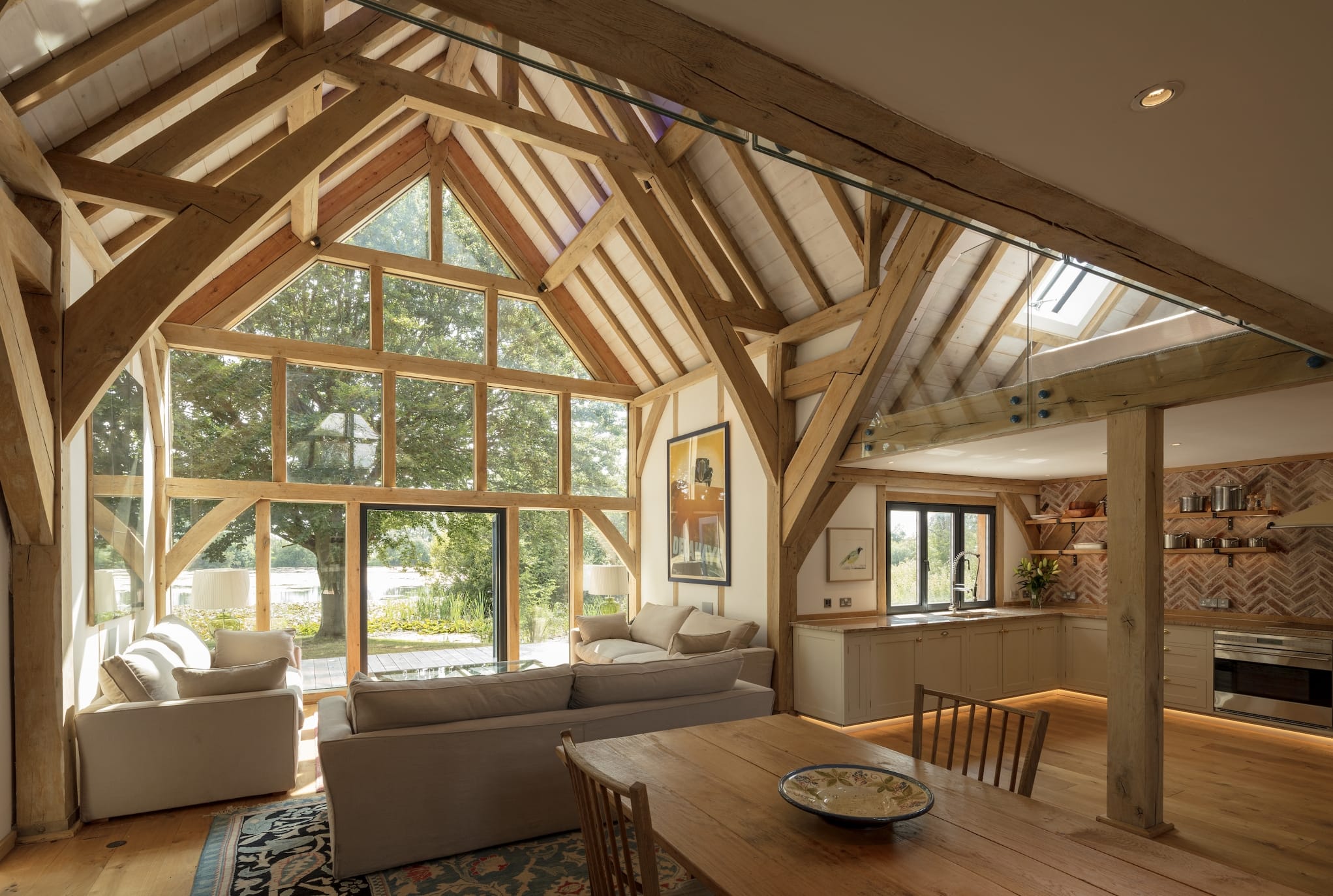
Heavy, substantial, durable and beautiful, it’s easy to see why oak has become enduringly popular. With the potential to last for centuries, it needs minimal treatment to stay looking good – in fact, just like us, it improves with age.
We use green oak – also known as freshly sawn oak – for timber framing because it is easier to work with than seasoned oak. Green oak is particularly suitable for timber framing because it is strong, workable, and capable of supporting large structural loads. Over time, the timber dries out, resulting in the gnarly splits and soft silvered tones so characteristic of an oak frame building.
We select our oak from carefully managed French forests, where oak is grown specifically for timber framing. The wood is tall and straight, making it perfect for construction. And because it’s from a PEFC-certified forest, it will be replaced with another tree. Responsibly sourced oak such as this is naturally sustainable and stores carbon throughout your building’s life.
Type
Hardwood
From
Normandy, France
Benefits
Durable, strong, versatile, needs no treatment or maintenance
Uses
Timber framing, restoration

Douglas Fir
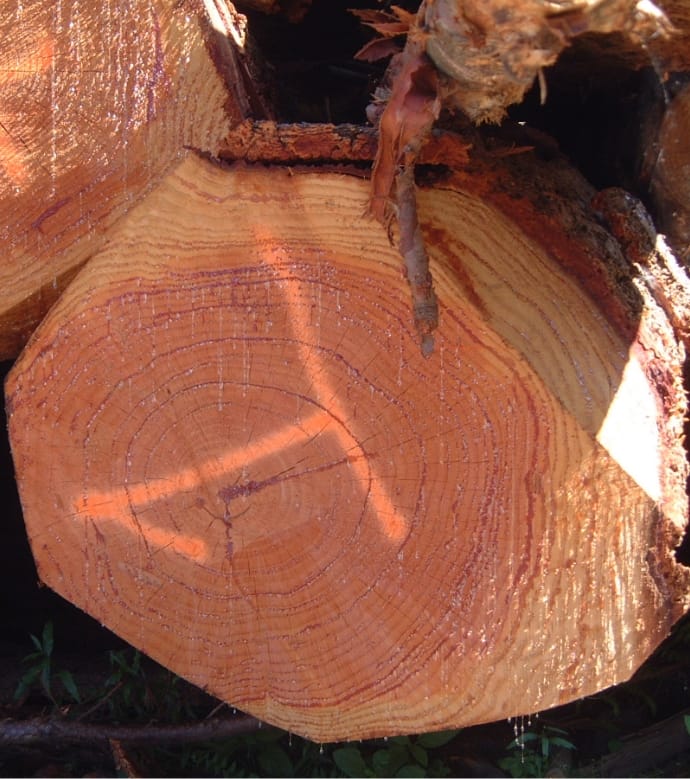
With a straight grain and warm tones that deepen over time, Douglas fir is an exceptionally strong softwood that’s best in projects that demand straight lines and a crisp finish.
Carefully graded Douglas fir performs exceptionally well in structural applications and works beautifully alongside oak in bespoke timber frame buildings.
We source our Douglas fir from certified forests and responsibly managed supply chains. And because it’s from a PEFC-certified forest, it will be replaced with another tree. Responsibly sourced timber, such as this, is inherently sustainable and stores carbon throughout your building’s life.
Type
Softwood
From
United Kingdom
Benefits
Strong, light, cost-effective, works well with a range of finishes
Uses
Timber framing

Softwoods
Some projects benefit from specific types of wood, allowing for a more innovative result, such as the larch roof on the Weald and Downland Museum’s gridshell building.
As with all our projects, we select materials based on your build’s structural requirements and your aesthetic preferences. Timbers such as larch or spruce offer greater versatility and may be used for specific structural components, secondary elements, or internal framing where weight, stability, or design considerations require them.
We select these materials with the same level of care and attention as our primary structural timbers, from English Woodlands Timber. On occasion, we source from specific estates, such as Goodwood. All our wood is from PEFC-certified forests, which means each tree we use will be replaced by another tree. Responsibly sourced timber like this is inherently sustainable and stores carbon throughout your building’s life.
Type
Softwood
From
United Kingdom
Benefits
Strong, light, cost-effective, works well with a range of finishes
Uses
Timber framing


Glulam
Glulam, or glue-laminated timber, is an engineered structural timber created by bonding layers of timber together to form large, high-performance beams.
This manufacturing process produces timber members that are exceptionally strong, stable, and capable of spanning greater distances than solid timber alone – it is stronger than steel by weight. Because of this, glulam is especially useful for creating open interior spaces, wide glazing sections, and elegant contemporary forms.
Glulam is a sustainable material, manufactured from responsibly grown timber and produced with minimal waste. We source our Glulam from two key suppliers; a family-run business in Austria and a UK manufacturer, local to our yard.
Type
Engineered wood
From
Austria, UK
Benefits
Exceptional strength, versatile, stable
Uses
Structural integrity


Steel
We occasionally use steel to deliver more ambitious designs with features such as larger openings or longer spans. It can also be used to add a more contemporary accent to an otherwise traditional build.
Depending on your preference, we can conceal the steel within your structure, allowing the timber frame to take prominence, or we can make the steel a feature, providing a direct contrast between man-made and natural materials.
We source larger quantities of steel from Daver Steel, a Sheffield-based manufacturer that’s targeting Net Zero by 2030. If a project requires a smaller quantity of bespoke steel, we work with local blacksmiths.
Type
Man-made
From
United Kingdom
Benefits
Exceptional strength, versatile, stable
Uses
Adds structural integrity, aesthetics


Responsibly sourced,
responsibly produced
Every piece of timber that passes through our carpenters’ hands has been sourced through trusted suppliers who operate certified, responsibly managed forests.
Sourcing
Timber is one of the most environmentally responsible construction materials available. As trees grow, they absorb and store carbon. This means that well-designed timber structures can act as long-term carbon stores within the built environment – a stark contrast to man-made materials that generate carbon during manufacture.
Transportation
Our trusted planning consultants are here to support your planning permission application and are particularly experienced in heritage projects and sensitive sites.
Production
Visit our workshops, and you’ll notice a distinct lack of tech. There are no fancy CNC machines here; instead, every project is built with hand-held tools. Our teams make full use of chisels and planes alongside power drills and circular saws. This means we use less power – we don’t need to fuel energy-hungry computers or cutting machines. Instead, it’s hands-on, time-honoured craftsmanship, powered by mugs of tea and a great deal of biscuits.
End of life
All of the materials in our buildings can be repurposed or recycled, creating buildings that respect our planet’s future health.

Come & see our
oak for yourself
There’s nothing quite like standing next to a green oak frame to understand what makes it so special. We welcome visits to our workshop – whether you’re ready to share a brief or still thinking through your options. Come and meet the team, see our workshops and talk it through.
