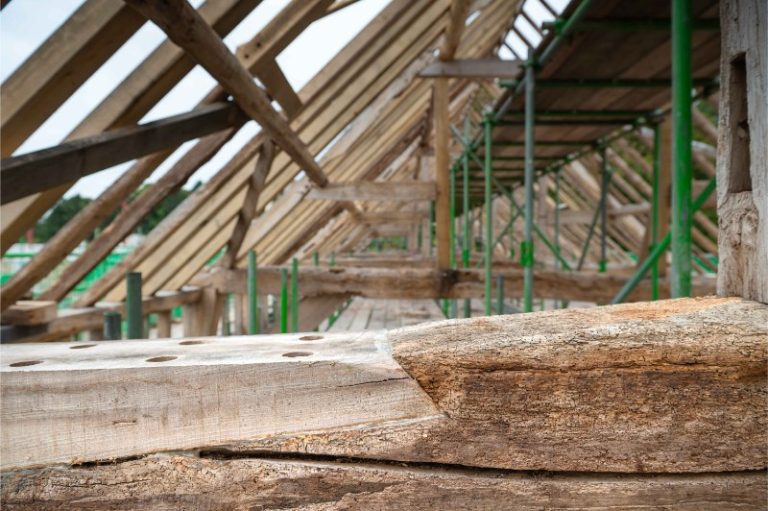

Oak beam restoration is a skill that feels as old as the buildings themselves. Many period homes, barns, and historic structures still rely on original oak beams that have stood for hundreds of years, weathering everything from storms to settlement to the natural movement of the timber. Over time, though, even the strongest oak can begin to show signs of fatigue. Moisture, woodworm, outdated repairs, and structural shifts can leave beams weakened or damaged.
Restoring oak beams isn’t simply about replacing timber; it’s about understanding how these frames were originally built, how oak behaves over decades and centuries, and how to repair it in a way that respects the building’s character and history.
This understanding only comes with experience. Our timber conservation specialists have spent years on site with historic buildings, from medieval barns to listed homes, developing their skills through careful, hands-on restoration work.
Oak frame restoration blends time-honoured joinery techniques with thoughtful conservation principles, allowing us to strengthen a structure while retaining as much original material as possible.
What is Oak Beam Restoration?
Oak beam restoration is the careful repair, reinforcement, and conservation of existing oak beams to preserve their strength and historic character.
In practice, this means far more than patching over damage. Many older oak framed buildings have beams that have slowly shifted, dried, or settled over centuries. Others have suffered from moisture ingress, insect attack, or inappropriate past repairs, often cement or modern fillers that trap moisture rather than allowing the building to breathe.
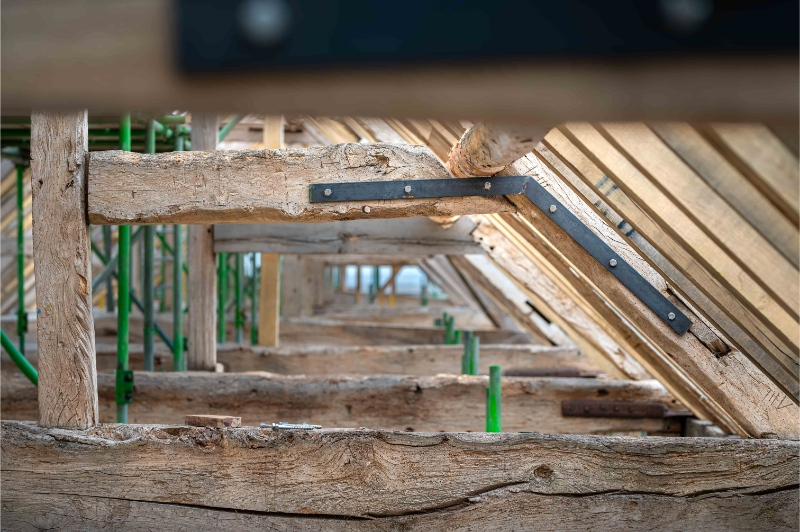
Restoring oak beams means working sympathetically with the original structure. Wherever possible, existing timber is retained, cleaned, and consolidated rather than replaced. When new oak is required, it is carefully selected, shaped, and fitted using traditional carpentry methods so the repair becomes part of the building’s natural evolution.
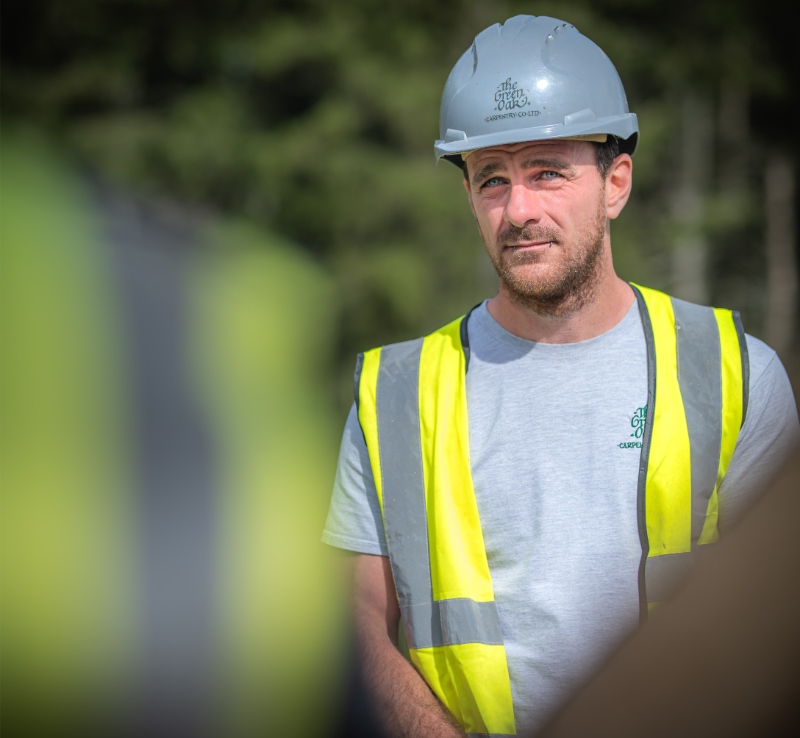
This approach reflects how our timber conservation team works on site. Our restorations are led by people who’ve spent years doing this work day in, day out. Team leader Dom Crowley has been restoring complex oak beams for the past eight years, working closely with Rob Holgate, who brings nearly nine years of hands-on timber conservation experience and is continuing his studies in building conservation.
The Process of Restoring Oak Beams
Like all good restoration work, restoring oak beams begins with understanding what’s really happening within the structure. A specialist assessment is carried out to identify the true causes of deterioration, whether that’s damp issues, failed joints, woodworm, structural movement, or infill materials that are no longer performing as they should.
Our assessments are led by experienced conservation carpenters who have worked on complex oak frame restoration projects, including large-scale barn restorations and sensitive listed buildings. This diagnostic stage is critical; without it, even well-intentioned repairs can cause long-term harm.
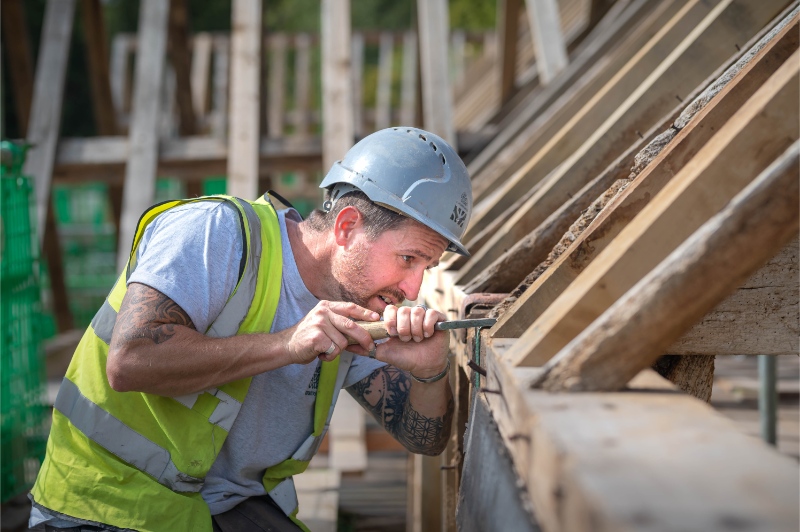
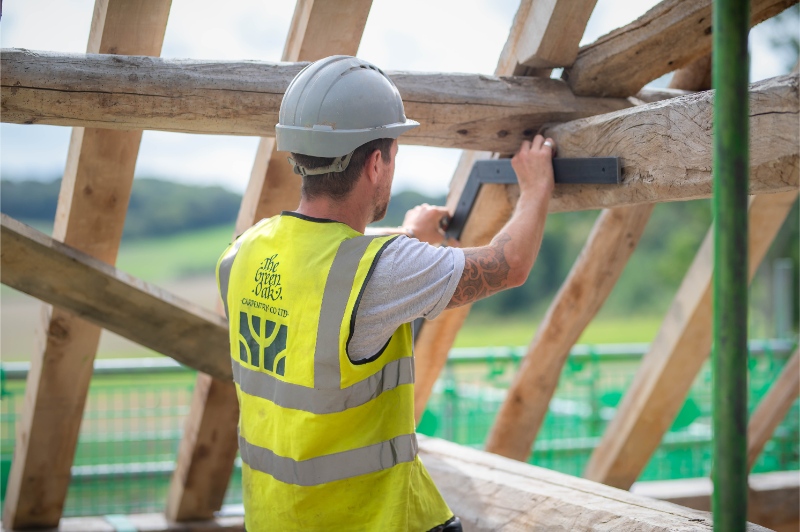
Once the root causes are understood and addressed, repair work can begin. Damaged sections of timber are carefully removed, but only where absolutely necessary. New oak is then spliced, scarfed, or plated into place using traditional joinery techniques that allow the frame to move and breathe naturally.
On larger or more sensitive projects, this work is often supported by conservation consultancy. We also continue to draw on the experience of our founder, Andrew Holloway, who still advises on more complex oak beam restoration and heritage projects, helping to carry that knowledge and understanding forward.
The result is an oak frame that is stronger, healthier, and well equipped to face the next century, without compromising the building’s original character.
The Benefits of Oak Beam Restoration
Restoring oak beams keeps the character of your building intact while ensuring the structure remains safe, strong, and long-lasting.
Beyond structural stability, oak beam restoration offers significant long-term benefits. It slows or halts ongoing decay, removes unsuitable modern materials, and helps the building regulate moisture naturally once again.
For listed and historic buildings, working with experienced timber conservation specialists ensures that restoration aligns with heritage guidelines and conservation best practice. Because restoration prioritises retaining original oak wherever possible, it is often more sustainable and cost-effective than full replacement.
The key benefits of oak beam restoration
- Preserves architectural character
- Strengthens the structure and prolongs the life of the building
- Prevents further decay by addressing underlying issues
- Supports breathability, avoiding moisture traps from past repairs
- Enhances the beauty appeal of exposed beams and interiors
- Meets heritage guidelines for listed or protected buildings
- Offers a sustainable and cost-effective alternative to full replacement
By restoring rather than replacing, you preserve the original beam’s character, including its tool marks, natural grain, and the patina that develops over time.
For more guidance on keeping your frame in good condition after restoration, you can read our Complete Guide to Maintaining Your Oak Frame article here.
The Final Say
Oak beam restoration is a blend of traditional skill, patience, and respect for the past. When done well, it not only strengthens a building but honours the heritage that shaped it. Whether you’re looking to repair a single beam or undertake a full oak frame restoration, the right approach will keep your building safe, beautiful, and true to its heritage.
For homeowners, conservation professionals, and anyone who cares for historic timber structures, restoring oak beams is one of the most rewarding ways to protect our architectural heritage. It allows these remarkable buildings to continue evolving naturally, just as they have for centuries.
If you’re considering restoring oak beams or would like advice on conservation carpentry, our team is always happy to help, simply get in touch. With 30 years of experience in contemporary and traditional timber structures, we are here to guide you through every stage of your project.